
Merrylands NSW 2160

Podium dock, compaction and a shared lift in Merrylands premises

A podium dock serving retail beneath apartments is shared infrastructure. One lift, one compactor, one bin room and several tenancies, each with its own cleaning contract and none of them responsible for the space they all depend on. The gaps between them are where the condition slips.

In short

Shared dock infrastructure in a Merrylands mixed-use building creates predictable gaps. Each tenancy cleans inside its own boundary, the building cleans its common areas, and the dock, the goods lift and the waste room fall between the two because nobody has written down which is which.

Clean Best resolves it by establishing at the walkthrough who instructs for each area, then scoping to that boundary. Where the building holds responsibility, gaps are reported to the manager rather than absorbed. Powered waste equipment is not operated by cleaning crews under any arrangement. Attendance is from Seven Hills.

Mapping responsibility before mapping tasks

The first question in a shared dock is not what needs cleaning but who is responsible for each part. The dock floor, the compactor surround, the bin room, the goods lift car, the lobby at each level and the corridor to each tenancy may have three or four different answers between them. Until those are established, any task list is guesswork. Fire stairs and service corridors add another set of answers again.

Establishing them takes a conversation with the building manager and a look at what each tenancy's arrangement covers. It is not always neat, and sometimes an area genuinely has no owner, which is the most useful thing a walkthrough can discover. An unowned area named in writing usually gets an owner quickly, whereas one that is quietly cleaned never does. Managers generally prefer to know, even when the answer is inconvenient.
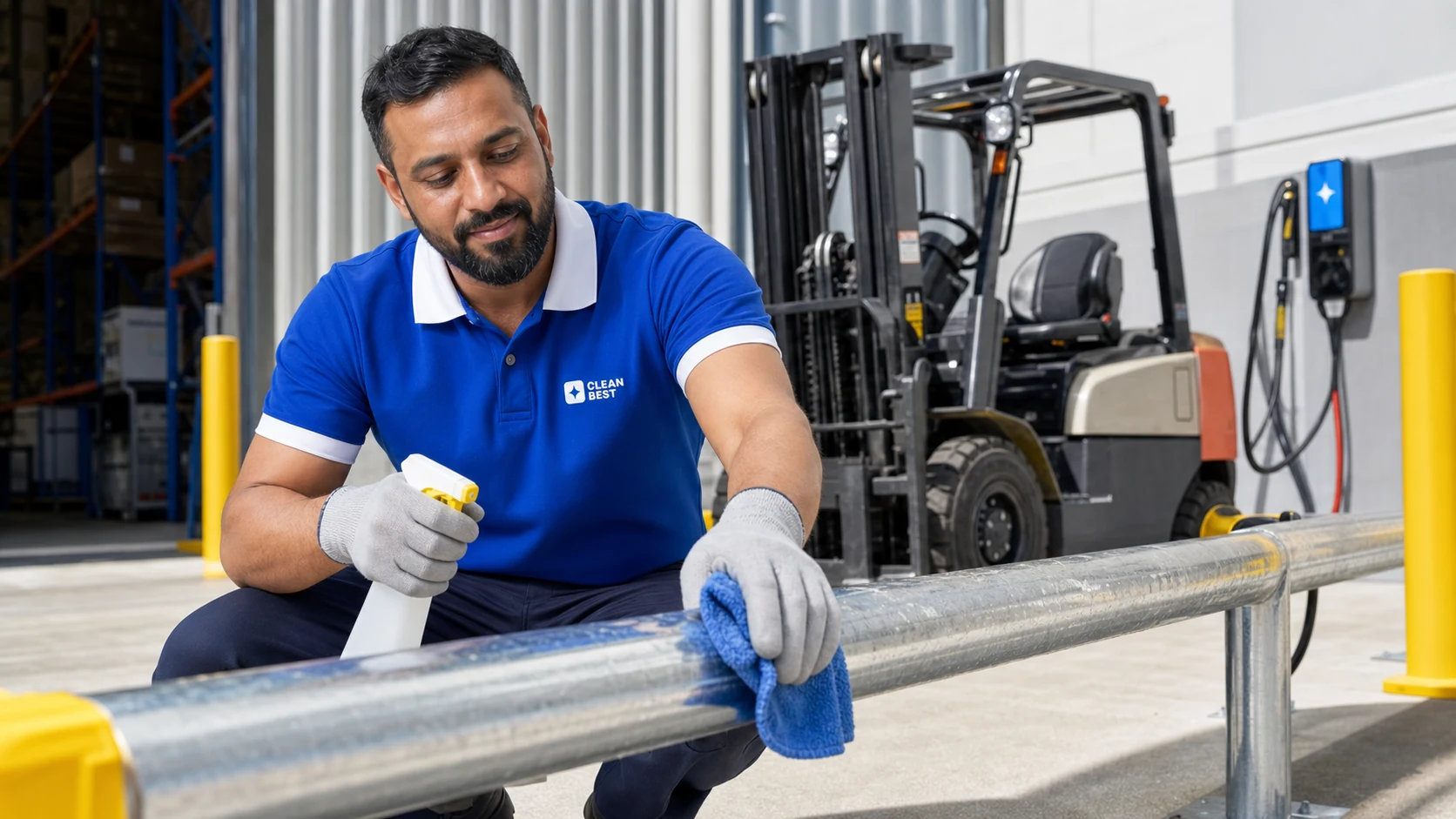
The compactor surround is everyone's and no one's

Compactors attract material. Tenants present waste at different times, some of it is not flattened, some of it misses the chute, and liquid from food waste ends up on the floor. The area is used by every tenancy in the podium and is generally cleaned by whoever happens to hold the building contract, at a frequency set before the current tenant mix existed. Nobody reviews that frequency until the area becomes unpleasant enough to complain about.

A scope covering that surround needs a stated frequency, a method suited to the soil and a reporting line for waste behaviour. Cleaning covers the floor, the approach and accessible surfaces. Operating the compactor, entering the chamber, moving loaded bins beyond an agreed short distance and handling material in the wrong stream are all excluded and belong with the building and its waste contractor. Chute rooms on residential levels are excluded on the same basis.

One lift, several tenants, one condition

A shared goods lift takes every delivery for every tenancy in the podium, which means its condition reflects the busiest user rather than the average. A tenant with two deliveries a week is looking at a car marked by a tenant with fifteen. That is not unfair, it is simply how shared infrastructure works, and it is a building responsibility rather than a tenancy one.

The practical answer is a building-held scope for the lift car, its thresholds and the lobbies, at a frequency reflecting total traffic. Where a tenancy is asked to contribute because its volume drives the condition, that is a commercial conversation for the manager. What should not happen is one tenant's contractor quietly maintaining shared infrastructure for everyone else. The building is also the only party able to see total volume across the podium.

Shared infrastructure items in Merrylands

  • Responsibility established for each area before tasks are listed
  • Areas with no identified owner named in writing
  • Compactor surround given a stated frequency and method
  • Compactor operation and any chamber entry ruled out in writing
  • Goods lift car, thresholds and lobbies scoped by the building
  • Waste presentation behaviour reported to the building manager
Clean Best supervisor checking a cleaned warehouse floor in Wetherill Park NSW

Working in Merrylands and the Cumberland

Merrylands in the Cumberland area combines retail, offices, healthcare and high-density mixed-use development, with newer buildings placing shops and services beneath apartments. Those podium levels share a single dock, lift and waste room between several tenancies, which concentrates the goods handling of a whole building into one small area. Clean Best services Merrylands from Seven Hills and starts by establishing who instructs for each part, because in shared infrastructure the responsibility question determines everything that follows. Buildings of this type also change tenant mix often, which shifts where the volume comes from without changing any of the arrangements.

Questions about Merrylands

Who should clean a shared podium dock?

Usually the building, through its own contractor, with the cost recovered through outgoings. It is shared infrastructure used by every tenancy and no single tenant can control its condition. Where a tenant takes it on informally, they end up subsidising their neighbours and the arrangement is difficult to unwind once it has become the expectation.

What if an area has no identified owner?

That is worth naming in writing, because an unowned area usually acquires an owner once someone points out that it has none. Quietly cleaning it removes any prospect of that happening. The walkthrough is the natural point to identify these gaps, since it is the one occasion when someone is looking at the whole building rather than one tenancy.

Can a cleaning crew operate the compactor?

No. Compactors and balers require training, authorisation and site-specific safety arrangements, and operating them is not part of a cleaning service under any arrangement. The scope covers the floor and approach around the machine. Where a compactor needs running more often, that is a staffing decision for the building rather than a cleaning frequency. The floor and approach around the machine remain in scope as normal.

How is tenant waste behaviour dealt with?

It is recorded and reported to the building manager, who holds the relationship with the tenancies. Cleaning the same spillage every week without reporting it conceals a problem that the manager could address through the leases. Dated records showing which stream is being misused and how often are far more useful than a general complaint.

Should the goods lift be on the tenancy or building scope?

The building, since it serves everyone and its condition is driven by total traffic rather than by any one tenant. Car floor, thresholds and lobbies belong together in one scope with a frequency reflecting the whole podium. Lift pits, shafts and machine rooms are excluded from cleaning entirely and are attended only by the lift contractor.

Get a fixed written quote for Merrylands

Free walkthrough, scope in writing, price back within 24 hours.

Request a quote
Call nowEmail us